Every title, open to everyone
The Trial Preparation Library
Two hundred and fifty-seven quick bites, each a two-page cheat sheet. Not a course to work through: the drawer you open when you have a two-minute question and need the answer now. Every sheet is written and searchable today; the videos are going up as they are shot. The whole index is below. Eight are open to anyone, the rest come with a membership.
Evidence Fundamentals & Hearsay
The working order of objections, and the whole hearsay system. This is the library you open most often, and every other library leans on it.
82 quick bites
4 open to everyone
01.01Relevance and its limits 8 bites
- 1What makes evidence relevant
- 2The two-part relevance test
- 3Relevance versus weight
- 4Sections 350 and 351: the California default
- 5Rules 401 and 402: the federal frame
- 6Section 352 and Rule 403: the discretionary exclusionFree sheet
- 7Making and defending a relevance objection
- 8How to give an offer of proof
01.02Foundation and authentication 10 bites
- 1What foundation actually meansFree sheet
- 2Personal knowledge as the universal foundation
- 3Authenticating a document
- 4Authenticating email and text messages
- 5Authenticating social media evidence
- 6Chain of custody
- 7Foundation for photographs
- 8Foundation for video and surveillance
- 9Foundation for demonstrative exhibits
- 10The secondary evidence rule
01.03Witnesses, competency and impeachment 9 bites
01.04Hearsay: the four-part analysis 8 bites
01.05Hearsay: the exceptions 18 bites
- 1Party admissionsFree sheet
- 2Adoptive admissions
- 3Authorized admissions
- 4Co-conspirator statements
- 5Prior inconsistent statements as substantive evidence
- 6Prior consistent statements
- 7Prior identification
- 8Present sense impression and the contemporaneous statement
- 9Excited utterance and the spontaneous statementFree sheet
- 10Then-existing state of mind
- 11Statements for medical diagnosis
- 12Business records
- 13Official records
- 14Learned treatises
- 15Declarations against interest
- 16Former testimony
- 17Dying declarations
- 18Past recollection recorded
01.06Practical hearsay 6 bites
01.07Judicial notice 6 bites
01.08Burdens, presumptions and inferences 3 bites
01.09The objection bench 14 bites
- 1The objection sheet — all thirteen, one page
- 2Relevance
- 3Foundation
- 4Lack of personal knowledge
- 5Speculation
- 6Hearsay
- 7Compound and calls for a narrative
- 8Assumes facts not in evidence
- 9Misstates the testimony
- 10Asked and answered
- 11Argumentative
- 12Calls for a legal conclusion
- 13Improper character evidence
- 14Privilege
Deposition Skills
A deposition is a trial document being written in advance. Every bite here is aimed at what the transcript will do in front of a jury.
38 quick bites
1 open to everyone
02.01Before you notice the deposition 6 bites
02.02Taking the deposition 8 bites
02.03Defending the deposition 7 bites
02.04The evidence rules that govern depositions 7 bites
02.05Using the deposition at trial 6 bites
02.06Your own client's deposition 4 bites
Expert Witnesses
Designation through cross, built around the two gatekeeping regimes and what actually persuades a judge to exclude an opinion.
34 quick bites
1 open to everyone
03.01Designation, exchange and disclosure 6 bites
03.02Qualifying and disqualifying 5 bites
03.03The gatekeeping motion 7 bites
03.04Deposing the expert 6 bites
03.05Cross-examining the expert 6 bites
Trial Skills
Opening through closing, on the assumption that the case is a documents case and the witnesses are sophisticated.
41 quick bites
1 open to everyone
04.01The paper case 8 bites
04.02Opening statement 6 bites
04.03Direct examination 7 bites
04.04Cross-examination 8 bites
04.05Exhibits and courtroom technology 6 bites
The Trial War Room
Not a course. The drawer you open at 10:40 p.m. the night before, or at counsel table with the judge waiting. Every bite here is written to be read in under ninety seconds.
28 quick bites
05.01I'm in trial tomorrow 6 bites
05.02The judge just asked… 6 bites
05.03Emergency evidence 7 bites
05.04Motions in limine 5 bites
05.05Preserving error 4 bites
Jury Selection
The one library that is not about evidence. Built on Picked to Win and the JuryBoard workflow, for the two days of trial that decide more than any evidentiary ruling.
34 quick bites
1 open to everyone
06.01Before voir dire 6 bites
06.02Conducting voir dire 7 bites
06.03Cause challenges 6 bites
06.04Peremptory challenges 6 bites
06.05Reading the panel 5 bites
06.06After the jury is sworn 4 bites
No bite matches . Try a rule number, a code section, or a word from the title.
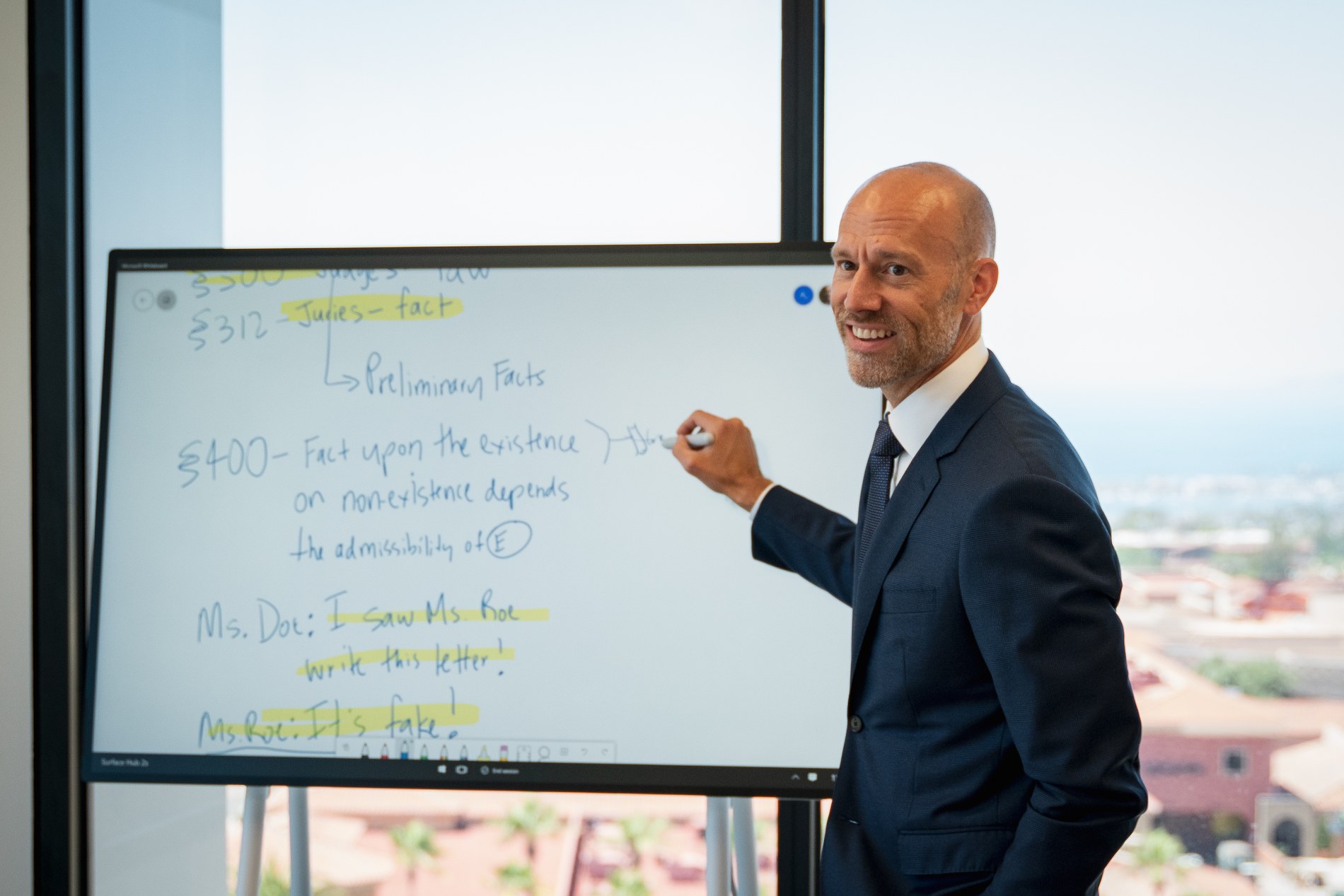
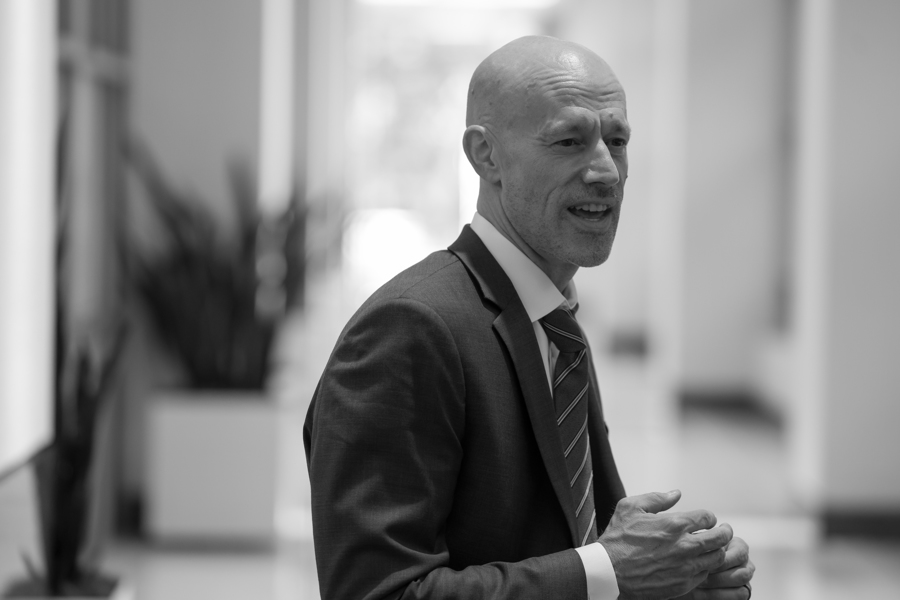
Who teaches it
David Sugden
Business trial lawyer and shareholder at Call & Jensen, Newport Beach. Every bite in this library comes from his experience in the courtroom.

Membership
You have seen the whole index. The membership opens it.
All four courses, sixteen hours of MCLE, the Trial War Room, and every video as it goes up. Thirty-day money-back guarantee.
- All 257 quick bites and cheat sheets
- All four courses ($1,996 separately)
- The Trial War Room
- Cancel any time