The five tensions that predict deliberations
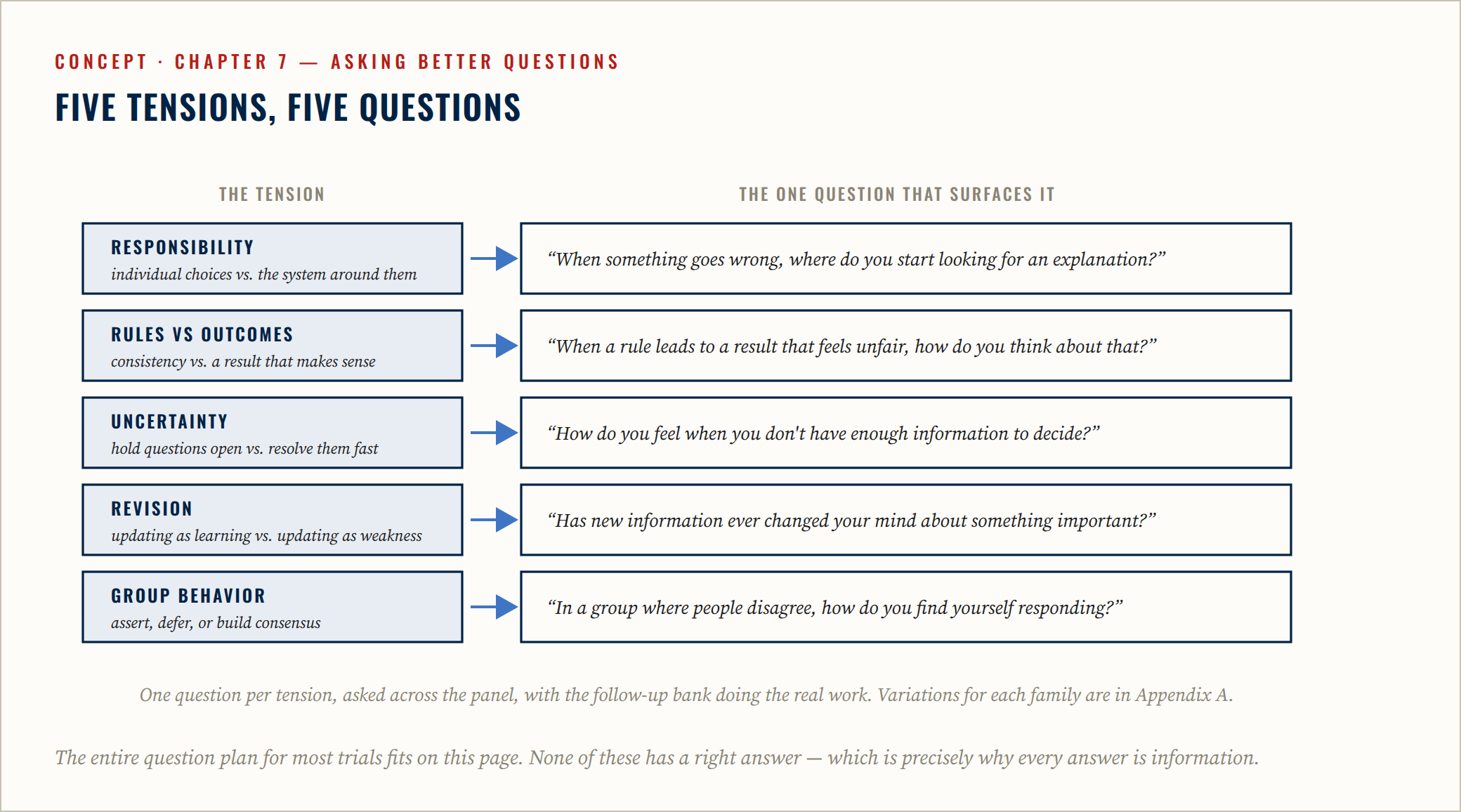
Not demographics. The handful of underlying attitudes that actually explain how a juror will argue in the room once the door closes.
New · From the founder of JuryBoard
A smarter way to pick your next jury.
Nearly every other part of trial gets taught, coached, and drilled. Voir dire gets a war story over lunch and a piece of advice that amounts to trust your gut. This book teaches the method instead: what information actually matters, how to draw it out of people trying to be polite in public, and how to hold onto it until the strikes come.
The sample is 32 pages, includes the full introduction and Chapter 1, and you are welcome to forward it to anyone.
David Sugden
There is no list of magic questions in this book, and no personality typology that sorts strangers into boxes. What is here is a repeatable way to work a panel: what to listen for, how to write it down, and how to decide when the court gives you thirty minutes and a room full of people you have never met.
Not demographics. The handful of underlying attitudes that actually explain how a juror will argue in the room once the door closes.
A note that says leader is a verdict you reached in four seconds. Two hours later you cannot reconstruct what the juror actually said. There is a better way to write it down.
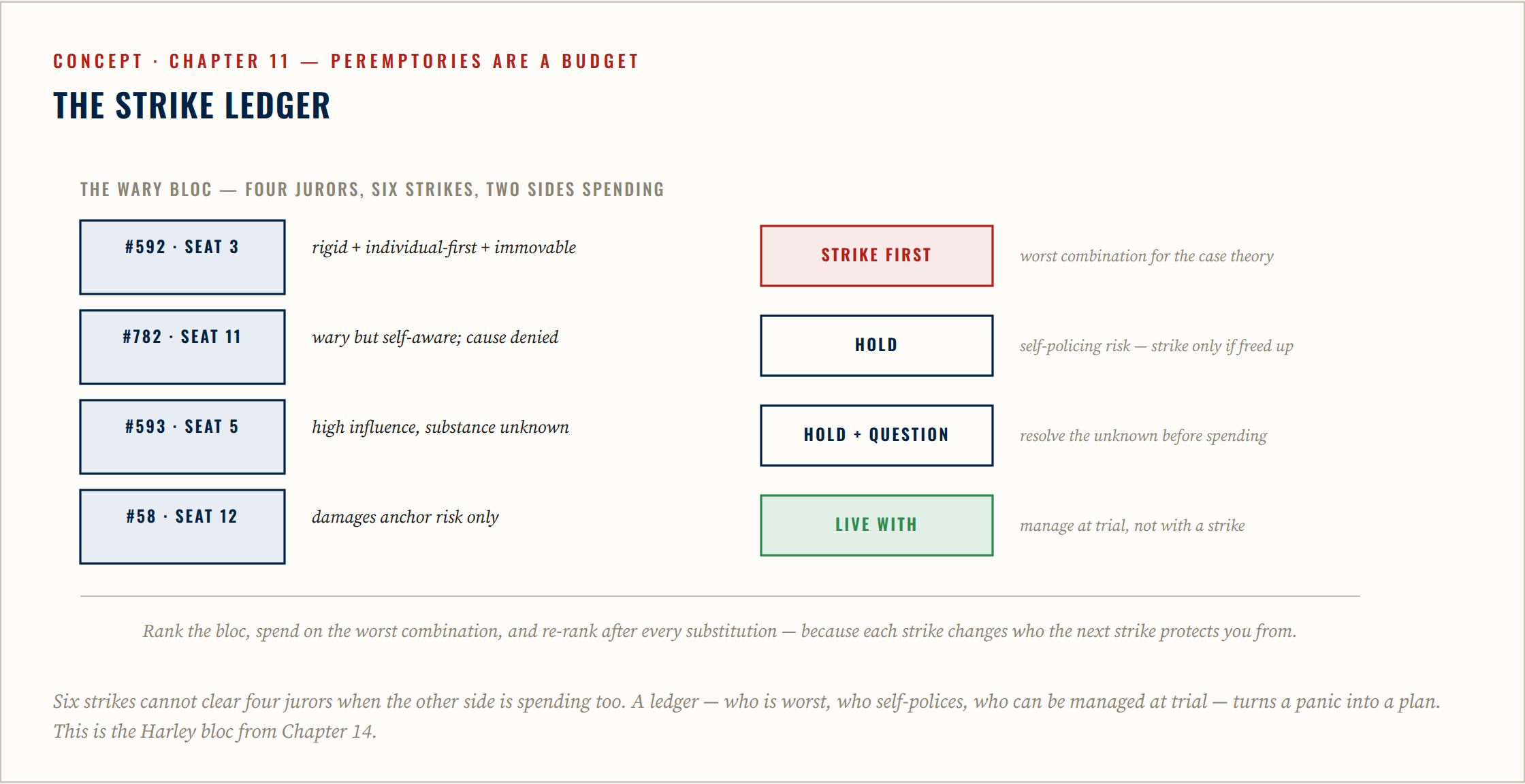
You have six. Spending them in the order jurors annoy you is not a strategy. Here is how to hold one back and still get the panel you need.
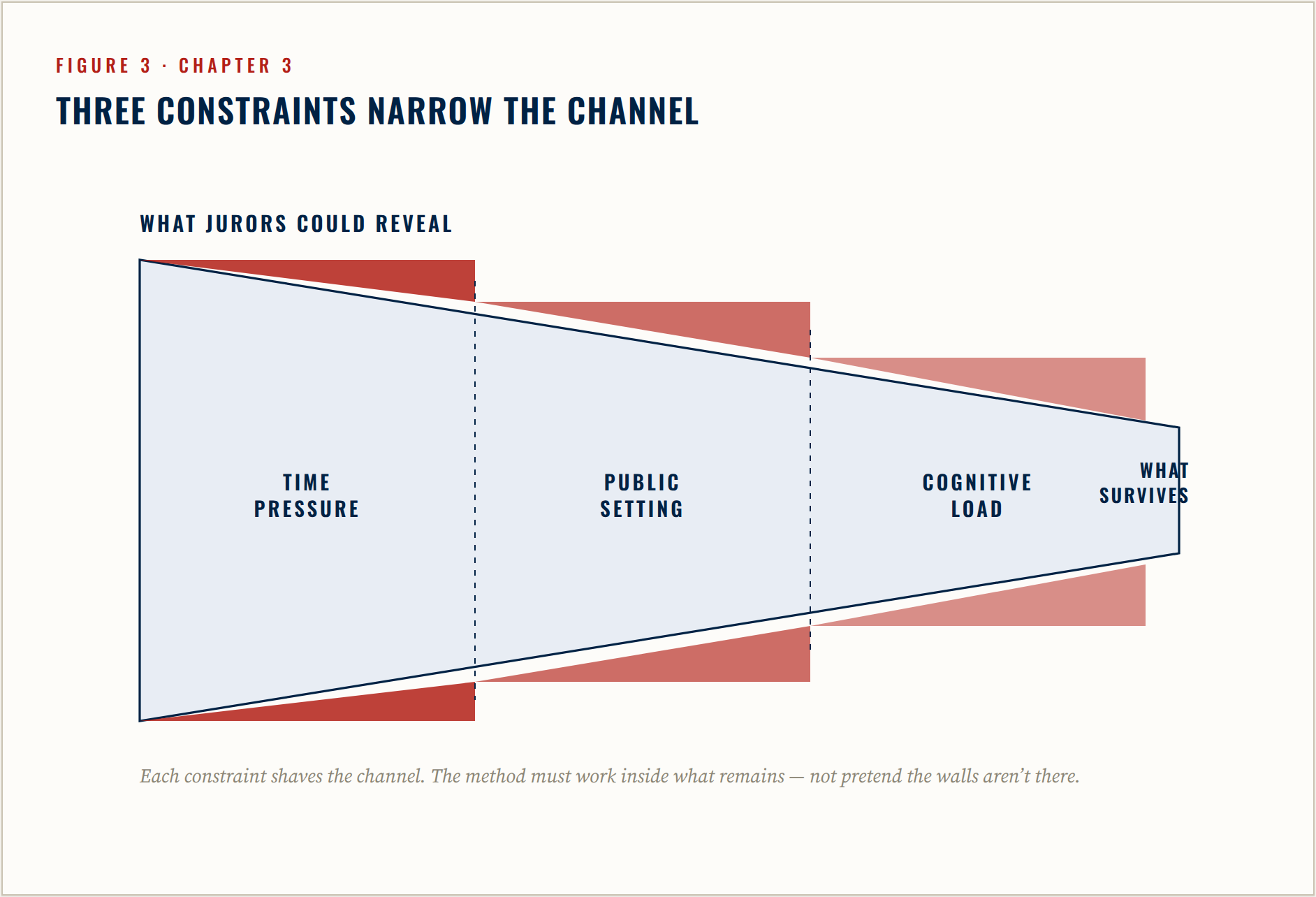
The research on how badly people read strangers is unkind to trial lawyers. It is also useful, once you know which parts of your instinct to keep.
Young lawyers ask for promises. Experienced lawyers stop listening. The failure modes are different and both are fixable.
Chapter 14 walks a single voir dire from the first panel list to the last strike, with the reasoning shown at every decision.
Every chapter ends in something you can run. The diagrams turn the arguments into one-page references, and the appendices collect the question banks, checklists, and worksheets on their own.
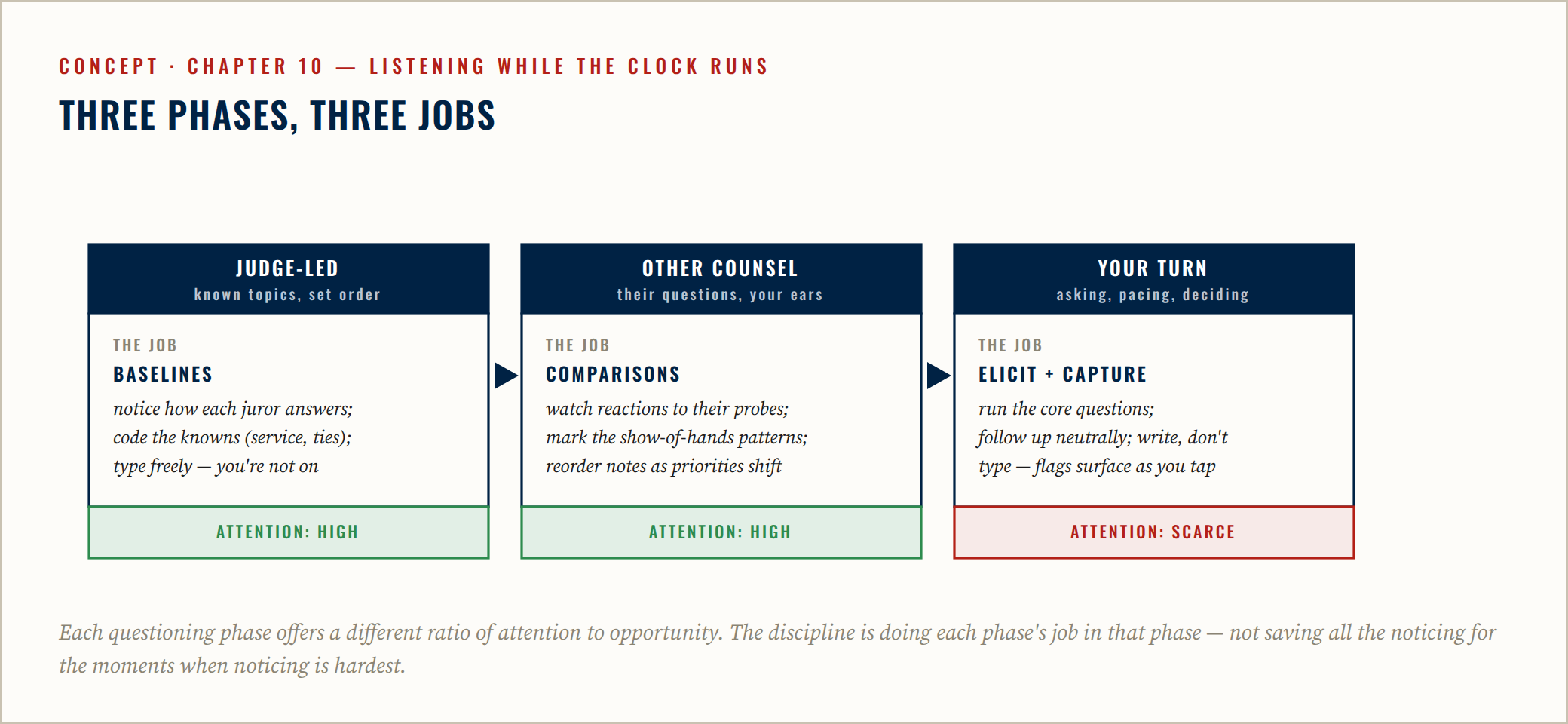
Each part stands on its own, but they are sequenced. Part I changes what you are looking for, which is what makes the mechanics in Part III worth learning.
Set in a readable text face on a warm page, with the figures drawn rather than photographed. It is a book you can work from during a break, not a PDF you skim once.
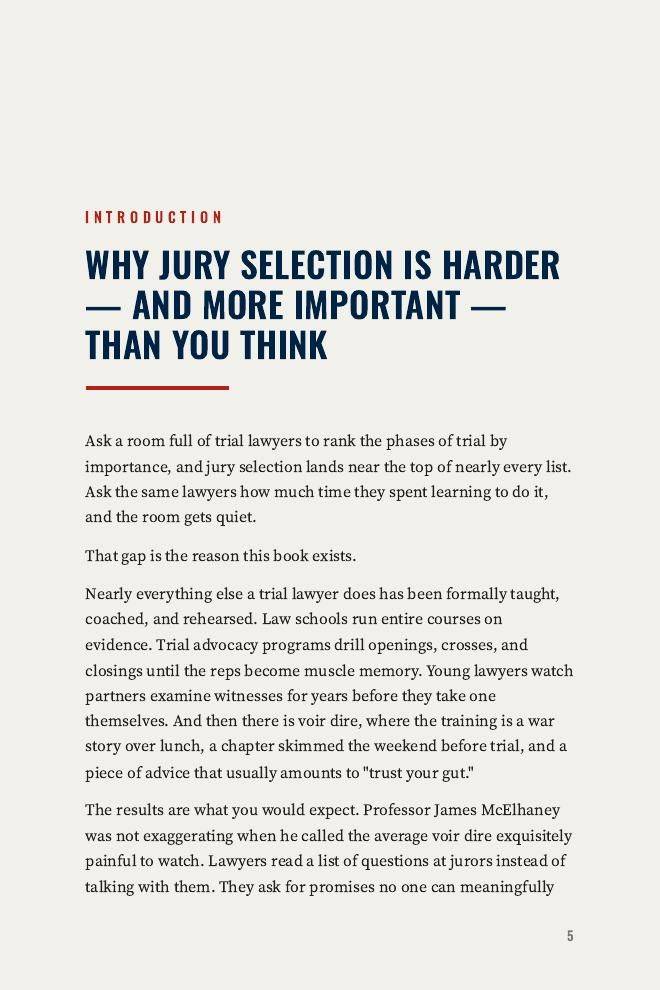
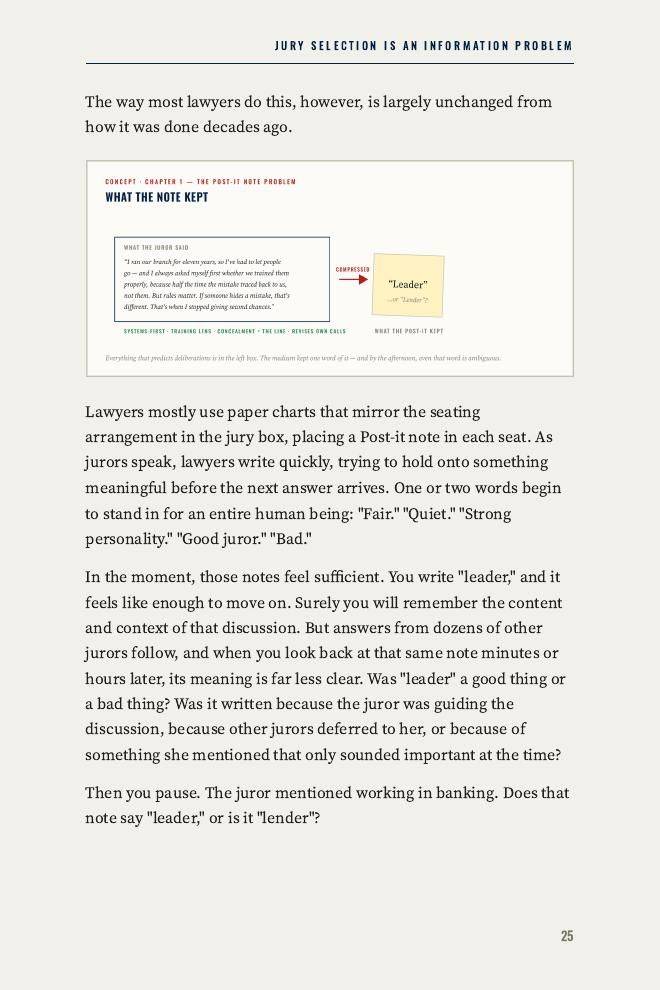
Two of 214 pages. The free sample is the complete first chapter, thirty-two pages, not an excerpt assembled for marketing.
Nobody taught you this and you are about to be handed a panel. The book gives you a structure to walk in with, language that does not sound like a deposition, and a way to take notes that will still make sense when you have to strike.
Appendix A gives you questions to start from. Appendix C gives you the worksheets to prepare with.
You have picked more juries than most. What you probably have not done is examine the method you built by accident in your first decade and have run on ever since.
Parts II and V are the ones that tend to sting, which is the point of them.

David is a business trial lawyer who tries high-stakes jury cases nationally, for plaintiffs and for defendants. He teaches evidence, depositions, expert testimony, and trial practice at evidenceattrial.com, and he built JuryBoard, the software that runs the method in this book on a screen instead of a legal pad.
This book is what he wishes someone had handed him before his first voir dire.
The note system, the tension grid, the strike ledger: all of it works with a legal pad and a pen, and the book teaches it that way first. If you would rather run it on an iPad or a laptop, JuryBoard is the tool built for exactly this method, and the book points to it where it helps. You do not need it to use the book.
Email required. One message when the sample lands, and nothing else unless you ask.
Send me the samplePrices are set on Amazon and differ by format.
Get it on AmazonPricing on request.
Ask about firm pricingKindle or paperback. The diagrams and the worksheets in the appendices are built to be written on, so the paperback is the better copy if you plan to carry it into a voir dire.
Yes. A firm license covers distribution to every lawyer in the firm, and it is the usual way associates and trial teams get a copy. Ask and we will send terms.
The book is about how jurors decide, not about the cause of action, so the method works either way and the text does not sort itself into civil and criminal. What it does not do is walk through the procedures particular to criminal selection.
No. The membership covers the four courses and the member library. The book is sold on its own, on Amazon.
Thirty-two pages, free, no card. If the method is not for you, you will know by the end of it and it will have cost you an afternoon.

Get started today before this once in a lifetime opportunity expires.